When two stars are separated by the immense gravity of a massive black hole, one of them can be ejected at an extreme speed, possibly fast enough to abandon our galaxy, and then this star becomes a Hypervelocity star.
My research spans from near-field cosmology, in searching for the dynamical friction wake response in the outskirts of the Milky Way halo; star formation, by analyzing the clustering properties of massive young stellar objects; stellar streams in the halo, from a current program to search for the stellar counterpart to the Magellanic Stream; and most importantly, the search for hypervelocity stars originating from interactions with the black hole at the center of our galaxy.

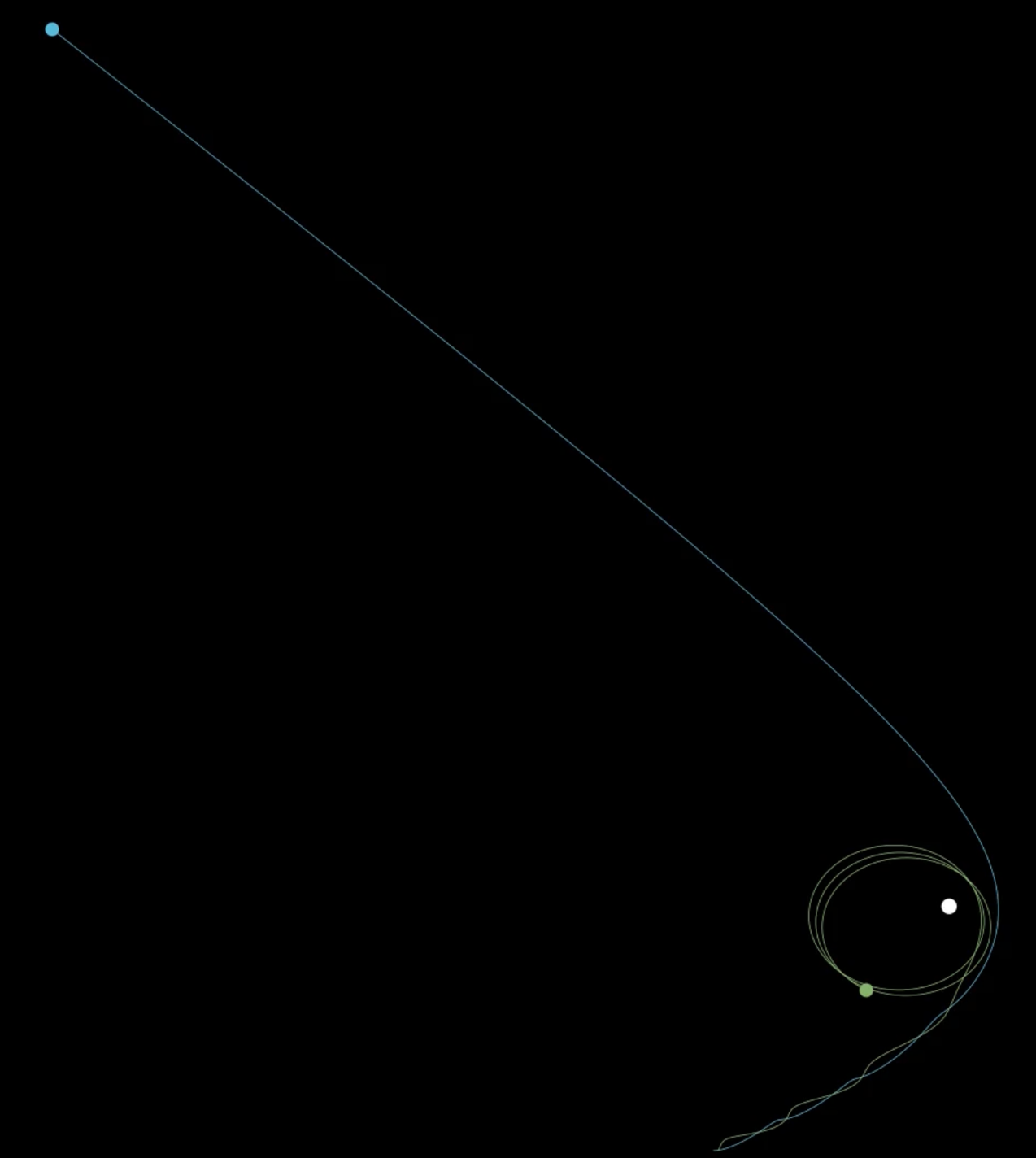
Hypervelocity stars in DESI DR1
Using spectroscopy from the Dark Energy Spectroscopic Instrument (DESI) and Gaia
Astrometry, we performed a six-dimensional search for HVSs via Monte Carlo backward orbit integration to identify hypervelocity star candidates originating from the galactic center by tidal interactions with the massive black hole at the center of our galaxy.
We identify a compelling hypervelocity star candidate, hereafter Lefleftun, whose trajectory can be traced unambiguously back to the GC. The star is currently located in the halo and is chemically distinct from known populations on radial orbits, exhibiting supersolar metallicity. The inferred ejection velocity is consistent with the Hills mechanism, supporting an origin in the innermost stellar populations of the Milky Way. This star is particularly remarkable, since unlike previously identified A- and B-type HVSs, Lefleftun is solar-type, enabling detailed chemical analysis of its atmosphere and providing a window into the chemistry of the central regions without the hindrance of dust and crowding.
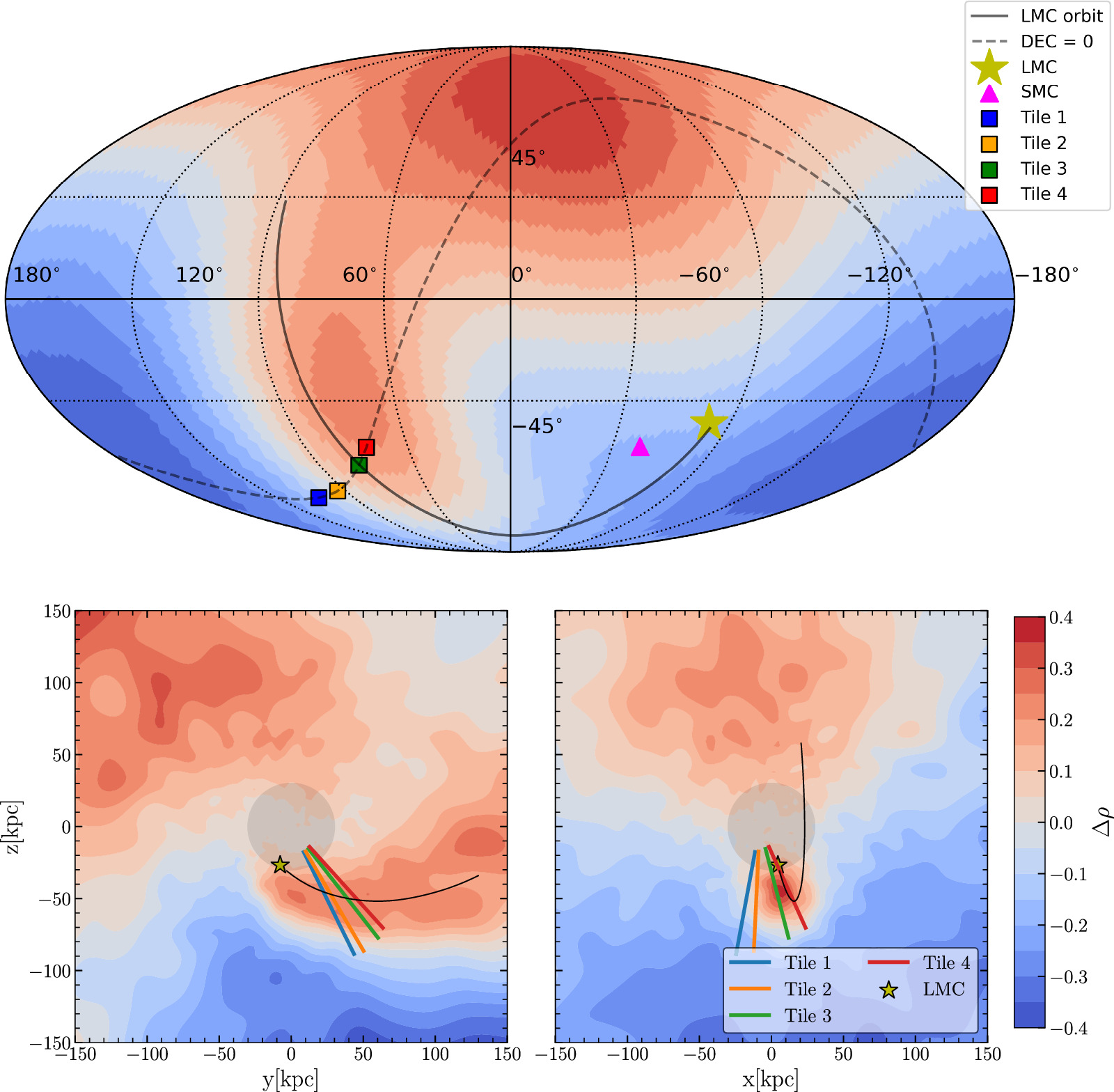
Detecting dynamical friction wake induced by the LMC
Through a photometric campaign using the Dark Energy Camera on the 4m Blanco Telescope and the VIRCam instrument on the 4m VISTA telescope, we identified using two tracers, the dynamical friction overdensity on the outskirts of the Milky Way halo. This work involved a novel apporach to select nMSTO and red giant populations in the faint end where non-resolved galaxies dominate the number count.
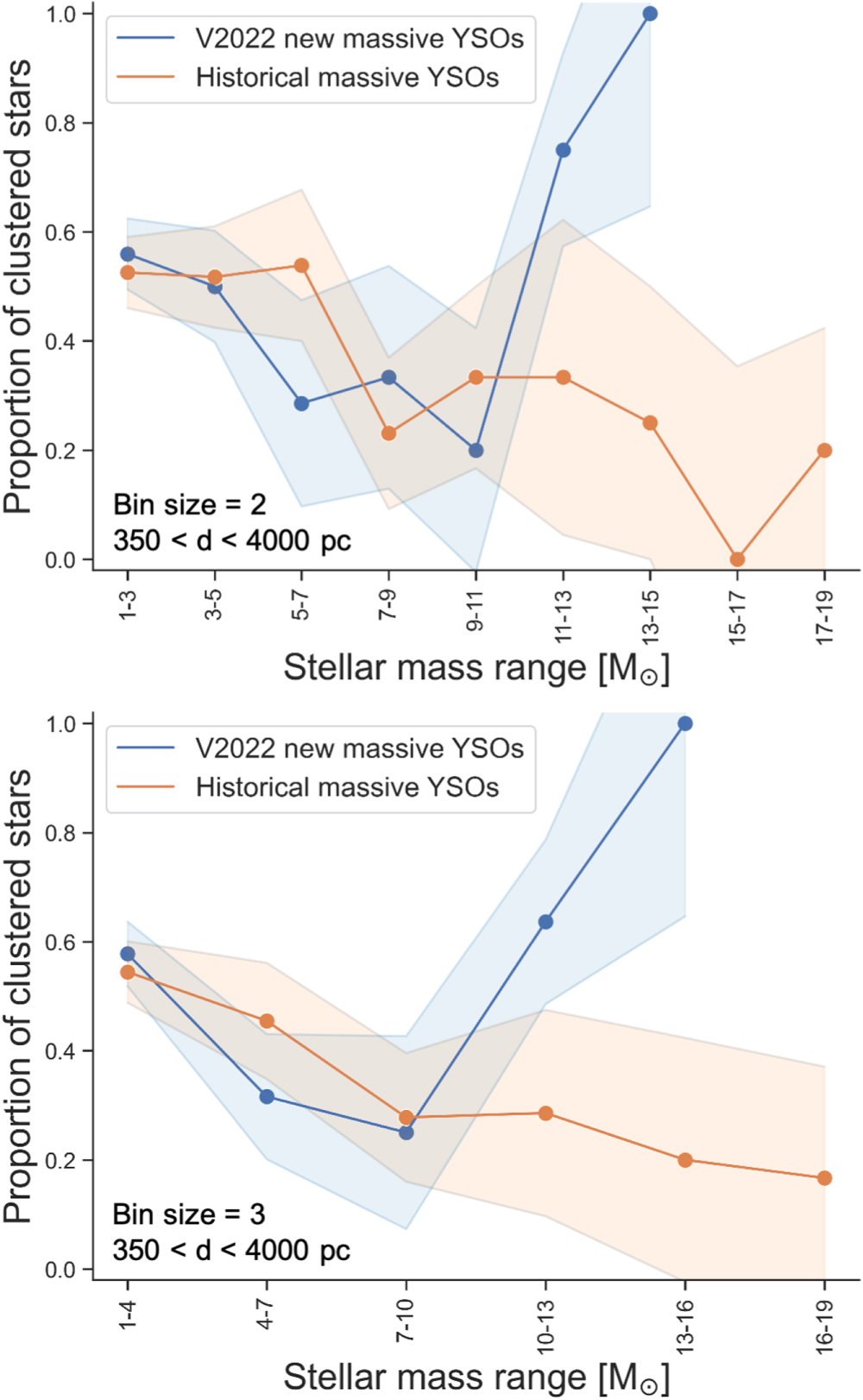
Clustering properties of intermediate and high-mass Young Stellar Objects
We analyzed the clustering properties of high-mass Young Stellar Objects, by the application of the machine learning algorithm HDBSCAN on the entire Gaia DR3 data release to assess the proportion of Young stellar objects that belong to a cluster or were formed in isolation. Since these objects are too young to move from their birthplace, this can then be linked to the formation mechanism that took place and help distinguish between monolithic collapse or competitive accretion models (as competitive accretion requires interactions in clusters). We found the clustering ratio to be a function of stellar mass, with a statistically significant decrease in clustering for objects around the 7-9 solar mass bin.